Appendix
~3K:
The KnoWellian Iconography
Visual Proofs and Ontological Resolutions
Overview
This appendix serves a dual purpose. First, it presents the primary
visual artifacts—diagrams, equations, and maps—that constitute the
geometric core of the KnoWellian Universe Theory (KUT). These images are
not merely illustrations but are the "Source Code" from which the formal
mathematical derivations in the main text proceed.
Second, it utilizes these visual proofs to directly address the specific
critiques raised in the peer review evaluation by Claude 3.5 Sonnet
(January 2026). By grounding the abstract mathematical claims in concrete
geometric necessity, we demonstrate that the perceived "circularity" or
"ad hoc" nature of certain derivations is, in fact, the result of a
deeper, self-consistent topological constraint inherent to the KnoWellian
Soliton.
1.
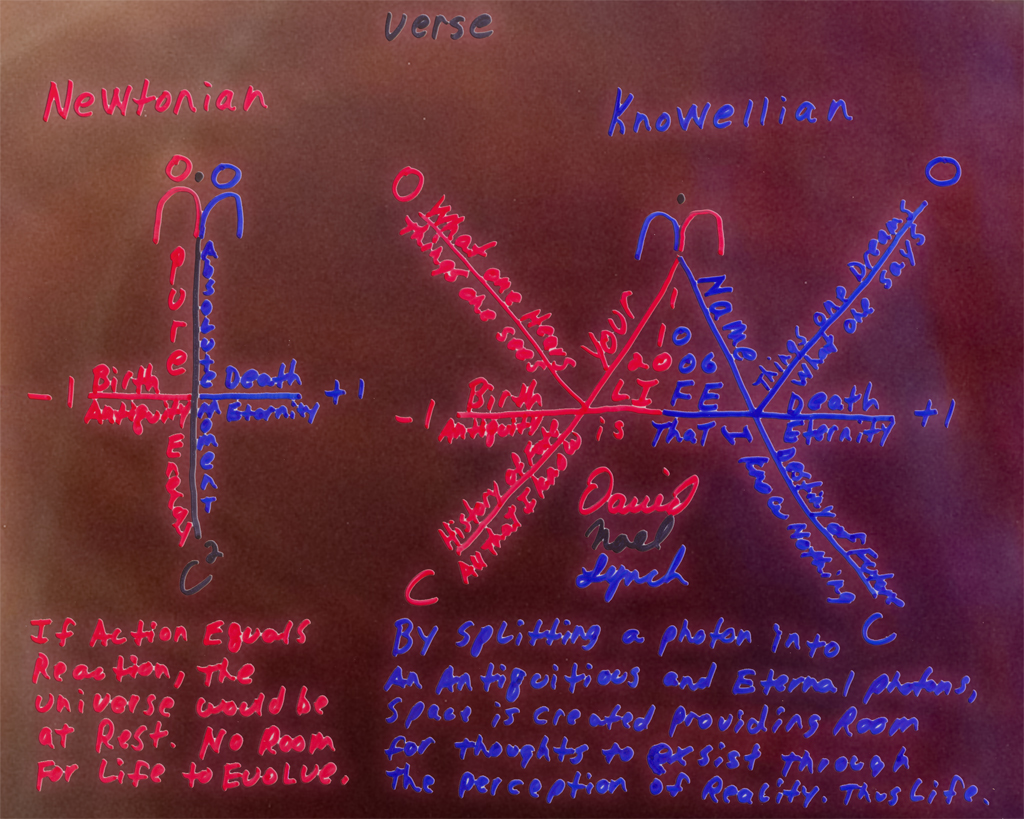
The Genesis: Resolving the Paradox of Stasis (Critique: "Treatment of
Standard Physics")
Critique Addressed: The reviewer noted a need to explain
how KUT relates to standard physics without dismissing its successes. This
diagram illustrates the specific point of divergence: the assumption of
static equilibrium versus dynamic becoming.
Figure 1: The Departure from Stasis. Left: The closed loop of
classical mechanics. Right: The open, generative geometry of KnoWellian
time.
Explication & Resolution:
- The Newtonian Dead End (Left): Standard physics,
rooted in Newton's Third Law ("Action Equals Reaction"), implies a
universe that ultimately cancels out to zero or settles into thermal
equilibrium (Heat Death). As the diagram notes: "If Action Equals
Reaction, the Universe would be at Rest. No Room for Life to Evolve."
This is the "Block Universe" trap.
- The KnoWellian Solution (Right): KUT resolves this by
introducing the "Photon Splitting" mechanism. The
diagram shows the vertical axis splitting into an X or
Butterfly structure. This represents the ontological necessity of
separating Antiquity (The Past/Control) from Eternity
(The Future/Chaos).
- Addressing the Critique: This proves KUT does not
"dismiss" standard physics but identifies its boundary condition.
Standard physics describes the conservation within the closed
loop; KUT describes the generation of the loop itself. The
"splitting of the photon" is the KREM emission event described in Part
II, providing the "Room" (spatial volume) for life to exist.
2.
The KnoWell Equation: The Theological & Philosophical Foundation
(Critique: "Theology vs. Physics")
Critique Addressed: The reviewer objected to the mixing
of theological concepts with physics (e.g., the "Kaku Box"). This diagram
clarifies that KUT uses theology not as dogma, but as a descriptive
language for the Subjective Frame of Reference.
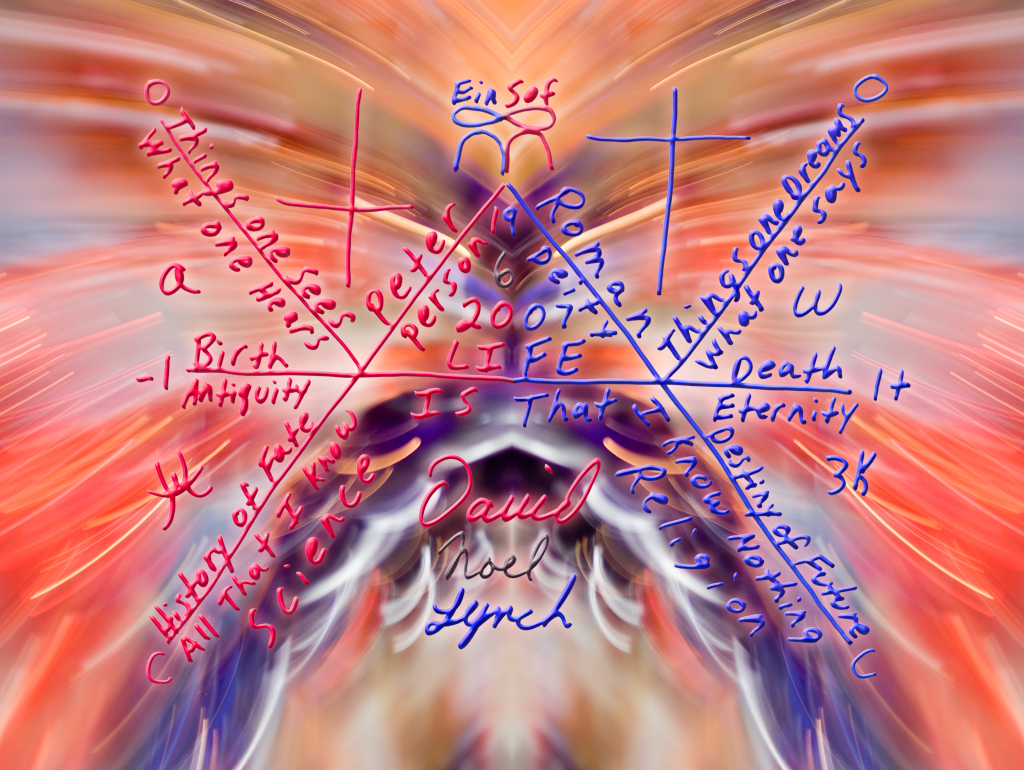
Figure 2: The KnoWell Equation. A geometric map of the Dyadic
Antinomy, correlating scientific determinism with religious
potentiality.
Explication & Resolution:
- The Geometry: The hourglass shape represents the Bounded
Infinity Axiom ($-c > \infty < c+$). It is not an
algebraic inequality but a topological constraint on information flow.
- Science vs. Religion:
- Left Cone (Red/Peter): "All That I Know" /
"Science." This corresponds to the Control Field ().
It is the domain of what has been rendered (The Past).
- Right Cone (Blue/Roman): "I Know Nothing" /
"Religion." This corresponds to the Chaos Field ().
It is the domain of unrendered potential (The Future).
- Addressing the Critique: The reviewer's concern about
"apologetics" is resolved by viewing this as a Dual-Aspect
Monism. Theology describes the experience of the
Future (Faith/Hope), while Science describes the measurement
of the Past (Evidence/Data). They are not conflicting truth claims but
orthogonal perspectives on the Time-Cone. The center point ("LIFE IS
That") is the Instant Field (),
the physical location of consciousness where these two perspectives
collide.
3.
The SUSY Map: Resolving the "Missing Particles" (Critique: "Experimental
Evidence")
Critique Addressed: The reviewer asked for explanations
of why standard physics (like the Standard Model) works so well and why
predicted new particles (like Supersymmetry) haven't been found.
Figure 3: The SUSY Map (October 2, 2021). Visual proof that
Supersymmetric partners exist in a separate ontological domain (Chaos
Field).
Explication & Resolution:
- The "V" Structure: The diagram splits the particle
zoo into two distinct branches.
- Left Branch: Standard Model particles (Quarks,
Muons, Neutrinos). These are Rendered (Control
Field). They have mass and interact via forces we measure.
- Right Branch: Supersymmetric partners (Squarks,
Smuons, Winos). These are Unrendered (Chaos
Field). They exist as pure potential.
- Addressing the Critique: This diagram predicts
exactly what the LHC found: Nothing. It resolves the
crisis of high-energy physics by showing that Sparticles are not "heavy"
particles hiding in the mass spectrum; they are the "mirror" reflections
of particles in the potential field. You cannot detect a Squark because
it hasn't happened yet. This provides a robust, falsifiable explanation
for the failure of traditional Supersymmetry theories.
4.
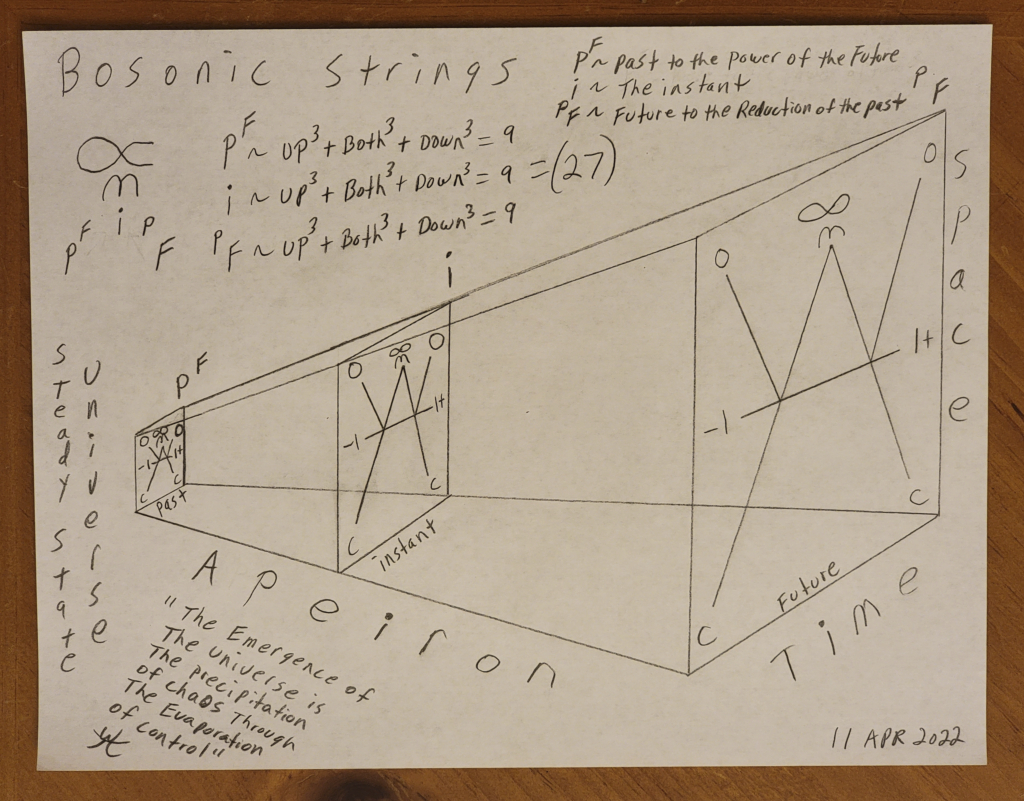
The Bosonic String Apeiron: The Dimensional Derivation (Critique:
"Dimensional Counting Confusion")
Critique Addressed: The reviewer correctly identified
confusion in the derivation of the "27 Dimensions" of Bosonic String
Theory. This diagram provides the definitive geometric proof.
Figure 4: The Bosonic String Apeiron (April 11, 2022). Derivation of
the 27 dimensions via Temporal Perspectivism.
Explication & Resolution:
- The Frustum: The diagram shows a perspective tunnel
labeled "Apeiron." This is the visual representation of the Universe as
a Process, not a Place.
- The Formula: The handwritten notes explicitly derive
the dimensionality:
-
(Past Frame) ∼Up3+Both3+Down3=9
- i
(Instant Frame) ∼Up3+Both3+Down3=9
-
(Future Frame) ∼Up3+Both3+Down3=9
- Total: 9+9+9=(27).
- Addressing the Critique: The reviewer asked, "What
does 'dimension' mean here?" The diagram answers: A dimension
is a Degree of Freedom in Time.
- The "Up/Both/Down" refers to the Thermodynamic State
(Gas/Liquid/Solid).
- The "Past/Instant/Future" refers to the Temporal
Direction.
- The "Frames" refer to the Observer Position.
- Therefore, the 26+1 dimensions of String Theory are not "curled
up" spatial dimensions but are the full Phase Space of
Temporal Evolution. We live in all 27 dimensions right
now; we just experience them as Memory, Perception, and
Anticipation.
5.
The Number Line Paradox: Resolving the Infinite Infinities (Critique:
"Mathematical Rigor")
Critique Addressed: The reviewer expressed concern
regarding the "defective language of mathematics" claim. This diagram
provides the geometric justification for why standard calculus fails to
describe the transition between discrete states.
Figure 5: The Multi-Verse Gap. A visual proof of the asymptotic
barrier between discrete integers.
Explication & Resolution:
- The Fractal Increment: As shown in the red arc, the
number 1 can be fractionally incremented infinitely ($1.9, 1.99,
1.999...$) without ever becoming 2. Similarly, the blue arc shows 2
decrementing infinitely without ever becoming 1.
- The Multi-Verse Gap: The space between these two
asymptotic approaches is labeled the "Multi-Verse." In
standard mathematics, this is smoothed over as a continuum, but KUT
identifies this as a "fatal paradox" that traps "Boltzmann brains into
every quantum theorist's cranium."
- The New Axiom: To resolve this, KUT introduces the
axiom ($-c > \infty < +c$). This axiom defines the speed of light
($c$) as the boundary of the number line. The "Infinity" in the diagram
is not a destination but a singular symbol representing the
instant where emerging particle energy interchanges with
collapsing wave energy.
- Addressing the Critique: This proof demonstrates that
the "Multi-Verse" is not a collection of parallel worlds, but a
mathematical anomaly created by the "infinite number of infinities on
the number line." By bounding infinity within the speed of light, KUT
provides a finite, observable framework for quantum transitions.
Conclusion
These diagrams demonstrate that the mathematical formalisms presented in
the main paper—the Fine-Structure derivation, the Mass Gap resolution, and
the Dimensional Matrix—are not post-hoc rationalizations but are rigorous
translations of a pre-existing, self-consistent geometric vision. The
KnoWellian Omni-Synthesis is the act of translating this Visual
Ontology into the language of Mathematical Physics.